Berlin Day Tours
I’m Serious Day Tour Man AI, your day trip expert. Ask me anything — where to go, how to get there, and what’s actually worth your day.
Berlin’s day-trip ring holds an emperor’s philosophy garden, a peaceful revolution’s city, and a forest of canals where the mail still travels by boat. It also holds Sachsenhausen, and that day is placed early below because it should be planned as its own day, in the sober register such ground requires.
The city block covers the Reichstag dome’s free-but-registered mechanics, the Museum Island sort, and the etiquette the memorial landscape asks of everyone who photographs it.
Here’s what’s worth a day, with real times and honest trade-offs.

Popular Day Trips

Potsdam & Sanssouci
Twenty-five minutes by train — the palace runs on fixed times

Sachsenhausen
Preserved north of Berlin. Visited properly.

Leipzig
Bach’s church and the church whose prayers ended the GDR
The Spreewald
Three hundred channels, flat-bottomed boats, and pickled cucumbers

Dresden
The rebuilt baroque, two hours south — take the early train

Wittenberg
Where the Reformation began — the theses were real either way
Potsdam & Sanssouci — The Philosopher King’s Garden
Forty minutes southwest by S-Bahn, Potsdam is Prussia’s answer to Versailles, scaled to a king who preferred conversation to ceremony. Sanssouci Palace — Frederick the Great’s ten-room retreat above the terraced vineyards, “without care” by name and intent — runs on the mechanics that matter: entry is by fixed admission time with limited daily tickets, so book the slot online via the SPSG’s official ticket portal (tickets.spsg.de) or arrive at the Historic Mill visitor center early; summer afternoons routinely sell out, and weekday mornings are the recommended window. The park itself is free (a small voluntary contribution is invited), and the sanssouci+ day ticket bundles all the open palaces — the vast New Palace at the park’s far end included (closed Tuesdays; visited by fixed times) — for anyone making the full Prussian day of it.
The circuit beyond the terraces: the Chinese House’s gilded whimsy, the Orangery’s views, and then Potsdam’s other registers — Cecilienhof, the mock-Tudor palace where the 1945 Potsdam Conference divided the postwar world, the Dutch Quarter’s gabled streets, and the Glienicke “Bridge of Spies” on the Berlin boundary, where the Cold War traded its agents. Palace slot in the morning, park and town after — a full day that walks farther than it sounds; the park alone runs two kilometers end to end.
Read the full Potsdam day-trip page.
Sachsenhausen — Visited Properly
Forty minutes north at Oranienburg, the Sachsenhausen Memorial preserves one of the Nazi regime’s principal concentration camps — built in 1936 as the model for the system, administrative headquarters of the entire camp network, and after 1945 a Soviet special camp with its own dead. Tens of thousands were murdered here. The visit has its own register: unhurried, informed, and paired with nothing cheerful on the same day.
The mechanics: admission is free, the site is run by the Brandenburg Memorials Foundation, and the S-Bahn plus a signposted walk or bus reaches it without a tour — though the guided tours, from the foundation’s own offerings to the licensed Berlin tours, add context that the scale of the site makes valuable. Allow three to four hours: the perimeter walk, the barracks exhibits, Station Z’s execution and crematorium remains, and the Soviet-era museum each carry their own weight. Photograph with restraint, keep voices low, and dress for open ground — the Appellplatz is unsheltered in every season.
The frame, stated plainly: this is not an attraction but an obligation of memory that visitors take up voluntarily, and the day works best with quiet time after. The foundation’s own guidance discourages young children. Pair reflection, not itinerary, with the return.
Read the full Sachsenhausen Memorial day-trip page.
Leipzig — The Peaceful Revolution’s City
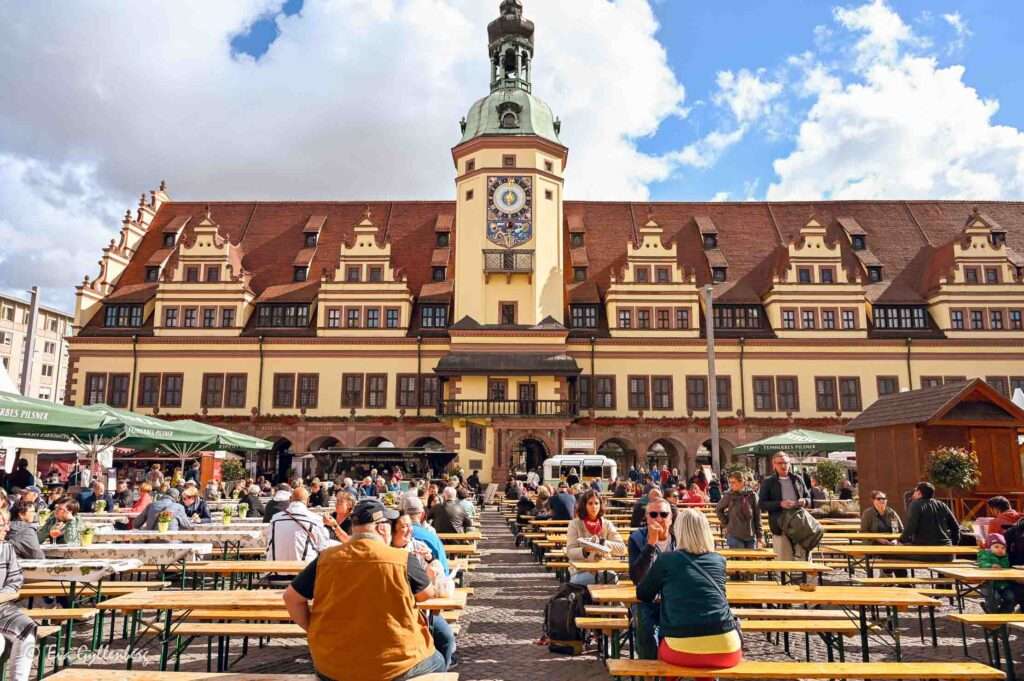
An hour and a quarter southwest by ICE, Leipzig runs two identities that meet in one church. The music first: Bach spent his last 27 years as cantor of St. Thomas, where the boys’ choir he directed still sings Friday and Saturday motets over his grave in the chancel — attending one is the region’s great free musical experience — and the Bach Museum opposite holds the manuscripts. Mendelssohn’s restored house and the Gewandhaus orchestra extend the lineage.
The history second: St. Nicholas Church hosted the Monday peace prayers that grew into the 1989 demonstrations — seventy thousand candles against a state that had planned for violence — and the peaceful revolution that opened the Wall began, by broad consent, here. The Stasi Museum in the “Runde Ecke,” the secret police’s own preserved offices, and the Forum of Contemporary History tell the GDR era with unblinking thoroughness, free.
The rest: the Völkerschlachtdenkmal — the colossal 1913 monument to the Battle of the Nations, 500 steps to a granite crown with the city below — the restored art-nouveau arcades of the center (Mädler Passage’s Faust cellar included), and the Spinnerei’s cotton-mill galleries for the art crowd that has been calling Leipzig “the new Berlin” long enough for the label to wear in. Compact, walkable, underpriced — the connoisseur’s pick on this list.
Read the full Leipzig day-trip page.
The Spreewald — Canals, Punts & Pickles
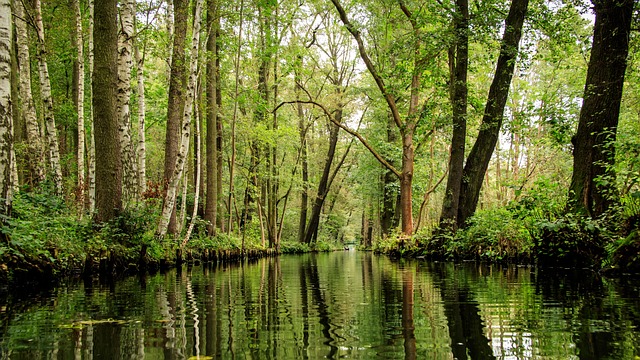
An hour southeast, the Spreewald is Germany’s gentlest anomaly: a UNESCO biosphere where the Spree frays into hundreds of forest channels, and the villages — settled by the Slavic Sorbs, whose bilingual signs and traditions continue — run on flat-bottomed punts poled by hand. Lübbenau is the classic base: the big harbor loads the traditional barge tours (blankets provided, kahn traffic jams genuine on summer weekends), and the poled glide through the alder tunnels to Lehde — the hamlet where even the postal service delivers by boat in season — is the essential ninety minutes.
The active option: rent a kayak or canoe and thread the marked channels yourself — the waterways are gloriously navigable, locks included, and paddlers escape the barge lanes within minutes. The land option: flat cycling paths shadow the channels for the pedal-and-swim variant.
The pickle truth, delivered with respect: the Spreewald gherkin carries EU protected status, the pickle stands sell a dozen variants (mustard, garlic, honey-dill), and the local economy leans into it with museums and cucumber cycle routes — try three, buy a jar, accept the kitsch as earned. The frame: barge-plus-Lehde plus lunch is the gentle full day; February’s iced channels, when locals skate the canals, is the secret second season.
Read the full Spreewald day-trip page.
Dresden — The Rebuilt Baroque
Two hours south (the fast trains make it commutable), Dresden is the day of resurrection: the Baroque center, erased in the February 1945 firestorm, has been rebuilt stone by numbered stone — nowhere more literally than the Frauenkirche, whose dark original blocks sit within the new sandstone like a scar worn deliberately. The dome climb reads the whole restored skyline; the church’s story, told plainly inside, carries the weight without theatrics.
The Zwinger anchors the art: the Old Masters Gallery’s Sistine Madonna (those two bored cherubs, in person at last), Vermeer and the Dutch rooms, and the porcelain collection that Augustus the Strong’s obsession funded. The Residenzschloss answers with the Green Vault’s treasury — the historic vault runs timed tickets that sell out, booked ahead — and the Procession of Princes’ 101-meter porcelain mural survived the firestorm outside it.
The stack: the Semperoper’s tours or an evening ticket, the Brühl Terrace’s “balcony of Europe” stroll, and — for the second register — the Neustadt across the river, where the Kunsthofpassage’s painted courtyards and the bar streets show the living city the postcards skip. It is the longest standard day here and a coherent one — gallery, church, terrace, train — and Dresden is worth the overnight for the floodlit skyline alone.
Read the full Dresden day-trip page.
The Dome Rules, Museum Island & Berlin Itself
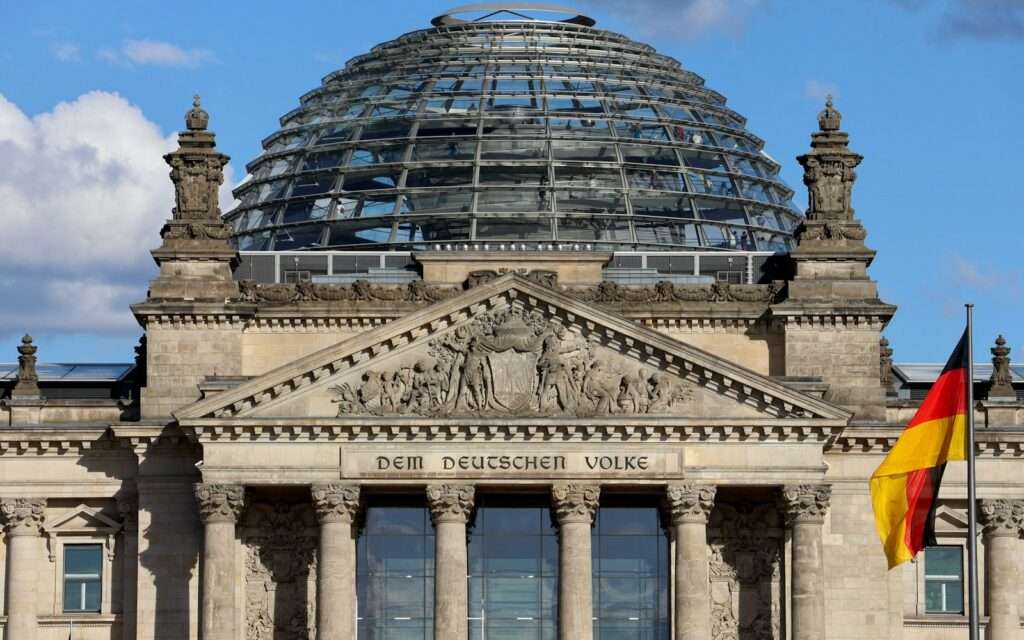
The Reichstag first, with its mechanics: the glass dome and roof terrace are free but require advance registration with ID through the Bundestag’s official visitor service — book the slot online days ahead (same-day desk allocations exist near the building, ID required, luck variable), and the audio guide keys itself to your position on the spiral. Sunset slots go first; the view over the Tiergarten to the skyline is the city’s best legal one.
Museum Island, sorted: five museums, one UNESCO ensemble — the Pergamon’s headline halls remain in long-term renovation phases (check what’s open; the panorama annex substitutes), so the first picks are the Neues Museum for Nefertiti and the Alte Nationalgalerie for the Romantics, with timed tickets online and the day pass for the committed. The East Side Gallery, the Wall’s longest surviving stretch, walks best early; the Gedenkstätte Berliner Mauer on Bernauer Strasse tells the Wall’s story with the completeness the murals can’t.
The etiquette, stated once: at the Memorial to the Murdered Jews of Europe and the city’s other memorial grounds, the register is quiet and the photography restrained — the stelae field is not a photo set, and the city notices. The living city: currywurst and döner as the twin street foods (both taken seriously, neither expensive), the Turkish market on the Landwehrkanal Tuesdays and Fridays, and the beer garden or späti-bench evening as the local institution. Season math: May–September runs the outdoor city at full tilt; the club question answers itself for those who came for it and ignores everyone else politely; and winter’s museum density plus Christmas markets make the off-season argument better here than almost anywhere.
Full day-trip pages: Wittenberg.
Frequently Asked Questions
How do you get Sanssouci tickets?
Fixed admission times with limited daily capacity — book online at the SPSG’s tickets.spsg.de, or arrive early at the Historic Mill visitor center. Weekday mornings are the safe window; summer afternoons sell out. The park is free; the sanssouci+ day ticket bundles all open palaces.
How should you visit Sachsenhausen?
As its own day, in the sober register: free admission, three to four hours, S-Bahn plus a short walk or a guided visit for context. Photograph with restraint, dress for open ground, and pair the day with nothing cheerful.
Do you need tickets for the Reichstag dome?
Registration, yes — the dome is free but requires advance booking with ID through the Bundestag’s visitor service; sunset slots go first, and a limited same-day desk exists nearby. The spiral’s audio guide runs automatically as you climb.
Is Dresden doable in a day from Berlin?
Yes — two hours each way by fast train around the Frauenkirche, the Zwinger’s Old Masters, and the Green Vault (book the historic vault’s timed slots ahead). The floodlit-skyline argument for an overnight is real but optional.
What is the Spreewald like?
A forest of canals under UNESCO biosphere protection — poled barge rides from Lübbenau to boat-postal Lehde, kayaks for the independent, flat cycling for the rest, and the protected gherkin in a dozen variants. Gentle, strange, and best midweek.